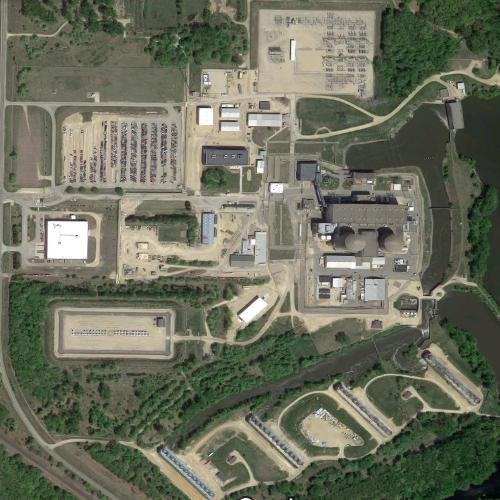
For over half a century, the Prairie Island Nuclear Plant has stood as a cornerstone of Minnesota's energy landscape, a complex yet vital facility nestled along the scenic Mississippi River. Its story is one of innovation, operational endurance, and ongoing dialogue with its surrounding communities. If you're looking for a thorough, unbiased deep dive into the Prairie Island Nuclear Plant History and Overview, from its foundational years to its ambitious plans for the future, you've come to the right place. This guide pulls back the curtain on its crucial role, the controversies it has navigated, and the cutting-edge strategies shaping its next chapter.
At a Glance: What You Need to Know About Prairie Island
- Location: Red Wing, Minnesota, on the Mississippi River, adjacent to the Prairie Island Indian Community reservation.
- Start of Operations: Began generating electricity in 1973.
- Technology: Two Westinghouse pressurized water reactors (PWRs).
- Power Output: Generates a total of 1,076 megawatts, enough to power over 1 million homes.
- Ownership & Operation: Owned by Northern States Power Company (NSP), a subsidiary of Xcel Energy, and operated by Xcel Energy.
- Current License: Units 1 and 2 are licensed by the NRC to operate through 2033 and 2034, respectively.
- Key Controversies: Historically centered on on-site spent nuclear fuel storage in a floodplain.
- Community Impact: Significant economic driver for Red Wing (42% of its tax base) and provides annual payments to the Prairie Island Indian Community.
- Future Vision: Plans include green hydrogen production and a proposed license extension through the early 2050s.
A Legacy Forged in the Mississippi Valley: Prairie Island's Early Years
The story of the Prairie Island Nuclear Plant begins in the heart of the Midwest, specifically in Red Wing, Minnesota. Situated strategically along the mighty Mississippi River, the plant was conceived as a powerful source of baseload electricity for the growing region. Its construction marked a significant step forward in Minnesota's energy independence, tapping into the efficiency and scale that nuclear power promised.
In 1973, after years of planning and construction, the Prairie Island facility officially came online. It was equipped with two Westinghouse pressurized water reactors (PWRs), a technology chosen for its proven reliability and safety profile. These reactors, designated Unit 1 and Unit 2, were designed to produce a substantial amount of electricity, with a combined capacity that quickly established Prairie Island as a critical component of the state's power grid. Ownership fell to Northern States Power Company (NSP), a forward-thinking utility that would later become a subsidiary of Xcel Energy, the entity that operates the plant today. From its very inception, Prairie Island was envisioned not just as a power plant, but as a long-term investment in the energy security of millions.
Initially, the plant's two units provided a net electrical generation of 560 MW for Unit 1 and 554 MW for Unit 2, totaling 1,076 megawatts. This substantial output made it an indispensable asset, feeding reliable, carbon-free electricity directly into homes and businesses across the region. The Nuclear Regulatory Commission (NRC), the independent agency tasked with ensuring the safe use of nuclear materials, granted the initial operating licenses, which currently extend through 2033 for Unit 1 and 2034 for Unit 2.
Navigating the Waters of Controversy: Spent Fuel Storage and Community Concerns
While the Prairie Island Nuclear Plant has delivered consistent power, its journey has not been without significant challenges, particularly concerning the storage of spent nuclear fuel. Nuclear power plants, by their nature, produce radioactive waste that requires secure, long-term containment. The initial design for nuclear waste management in the U.S. anticipated a national repository, but that solution has yet to materialize, leaving plants like Prairie Island to manage their spent fuel on-site.
The early 21st century brought this issue to a head in Red Wing. Xcel Energy's decision to store spent nuclear waste in large steel casks on the plant site sparked considerable controversy. The core of the concern stemmed from the plant's location within a floodplain, raising legitimate fears among local residents and particularly the adjacent Prairie Island Indian Community about potential water contamination during seasonal flooding events. The proximity to the Mississippi River, while ideal for cooling the reactors, posed unique challenges for long-term waste storage.
In 1991, Xcel Energy requested permission to store waste in 48 dry casks. The Minnesota Legislature, responding to public apprehension, initially limited this to just 17 casks. However, as these casks filled, the need for additional storage became undeniable. The legislature eventually granted an expansion for more casks, but not without significant conditions. These conditions underscored the state's commitment to both energy reliability and environmental protection, as well as community welfare.
Conditions for Expanded Waste Storage: A Balancing Act
The legislative approval came with specific requirements for Xcel Energy:
- Increased Renewable Energy Use: Xcel Energy was mandated to significantly increase its reliance on renewable energy sources, pushing the utility towards a more diversified and sustainable energy portfolio. This was a direct response to concerns about the long-term environmental footprint of nuclear power.
- Financial Compensation to the Prairie Island Indian Community: Recognizing the unique burden and potential risks faced by the adjacent community, the legislation required Xcel Energy to pay the Prairie Island Indian Community up to $2.25 million annually. These funds were earmarked for critical improvements and initiatives, including:
- Evacuation Improvements: Enhancing infrastructure and planning for emergency evacuations.
- Land Acquisition: Enabling the community to expand or relocate away from the most immediate risk zones.
- Health Study: Funding research into potential long-term health impacts.
- Emergency Management: Strengthening the community's ability to respond to any unforeseen incidents.
This legislative outcome represented a complex compromise, allowing the plant to continue its essential function while attempting to mitigate environmental and community risks and push for greener energy alternatives. It highlights the intricate dance between energy demands, environmental responsibility, and social equity that defines the operation of nuclear facilities like the Prairie Island Nuclear Plant.
Upholding Safety Standards: Regulatory Oversight and Operational Vigilance
The operation of any nuclear facility hinges on an unwavering commitment to safety, and the Prairie Island Nuclear Plant is no exception. At the heart of this commitment is the stringent oversight provided by the Nuclear Regulatory Commission (NRC), the federal agency responsible for regulating commercial nuclear power plants and other uses of nuclear materials. The NRC sets the standards, issues licenses, conducts inspections, and enforces regulations to ensure the safety and security of these facilities.
Even with meticulous planning, minor incidents can occur, and how they are managed provides insight into safety protocols. In May 2006, for instance, repair workers at Prairie Island experienced very low levels of radiation exposure from iodine-131 gas, which resulted from a filter leak. This event, while concerning, was thoroughly investigated by the NRC, which ultimately deemed it of "very low safety significance." This assessment reflects the multiple layers of safety systems and emergency response procedures in place to contain and mitigate such occurrences, ensuring that even minor leaks do not escalate into major safety issues.
Defining Emergency Planning Zones
A critical aspect of nuclear plant safety is comprehensive emergency preparedness. The NRC establishes specific emergency planning zones around every nuclear power plant, including Prairie Island, to guide response efforts in the unlikely event of an incident:
- 10-Mile (16 km) Plume Exposure Pathway Zone: This inner zone is designed for protective actions related to direct exposure to radioactive materials that could be released into the air. This includes considerations for immediate evacuation or sheltering. In 2010, the population within this zone around Prairie Island was 27,996.
- 50-Mile (80 km) Ingestion Pathway Zone: This larger zone focuses on the potential for ingestion of contaminated food or water. Protective actions here might include monitoring food supplies, restricting agricultural products, or issuing public health advisories. The population within this zone in 2010 was a substantial 2,945,237.
These zones are continually monitored and assessed, with emergency plans regularly drilled and updated in coordination with local, state, and federal agencies.
Assessing Seismic Risk
Concerns about natural disasters, particularly earthquakes, are also factored into nuclear plant safety. While Minnesota isn't known for major seismic activity, every nuclear plant undergoes rigorous seismic risk assessment. An August 2010 NRC study specifically estimated the annual risk of an earthquake causing core damage at Prairie Island as 1 in 333,333. This extremely low probability underscores the robust design and engineering standards applied to nuclear facilities, built to withstand natural phenomena far beyond typical expectations for their geographical location.
The combination of robust design, continuous regulatory oversight, detailed emergency planning, and ongoing risk assessment ensures that facilities like the Prairie Island Nuclear Plant operate with a formidable commitment to safety, prioritizing the protection of both the public and the environment.
From Routine to Unforeseen: A Snapshot of Recent Operations
The day-to-day operation of a nuclear power plant involves a constant cycle of meticulous maintenance, refueling outages, and continuous monitoring. While the goal is uninterrupted power generation, occasional operational events, from routine shutdowns to minor alarms, are an inherent part of managing such complex machinery. The recent history of the Prairie Island Nuclear Plant offers a glimpse into this operational reality, demonstrating how Xcel Energy and the NRC respond to various scenarios.
Unit 1: A Brief Interruption for Essential Repairs
In late January 2015, Unit 1 of the Prairie Island plant experienced an emergency shutdown. This wasn't due to a major malfunction but rather a necessary measure to replace a seal. Such shutdowns, while impacting power generation temporarily, are often planned or required to address maintenance issues proactively, ensuring the plant's long-term reliability and safety. By February 2015, Unit 1 had successfully resumed full power, demonstrating the efficiency of the plant's repair and restart protocols.
Unit 2: A Series of "Unusual Events"
Unit 2 has seen a few more unscheduled interruptions, each categorized under the lowest NRC emergency classification: a "notification of an unusual event." This classification signifies events that involve no actual release of radioactive materials and pose no threat to plant workers or the public. They are effectively minor incidents that warrant notification but are far from a serious emergency.
- March 5, 2015: An emergency shutdown was triggered by a fire alarm. False alarms or minor sensor issues can occasionally activate safety protocols, leading to a temporary shutdown as a precautionary measure.
- December 17, 2015: A turbine problem led to another emergency shutdown. Turbines, which generate electricity from the steam produced by the reactors, are complex pieces of equipment, and issues can arise that require the unit to be taken offline for inspection and repair.
- May 27, 2023: The most recent "notification of an unusual event" for Unit 2 occurred due to a malfunctioning external transformer. Transformers are crucial for stepping up the voltage of electricity for transmission to the grid, and a fault in one can necessitate a unit shutdown to prevent damage or ensure safety.
In each of these instances, the plant's operators followed established procedures, promptly addressing the issues and restoring the unit to service without any broader safety concerns or significant impact on the surrounding community.
Latest Outages: Refueling and Electrical Issues
More recently, late 2023 saw both units offline for various reasons:
- November 2023: Unit 2 was taken offline for its routine refueling. These planned outages are essential for replacing spent nuclear fuel, performing extensive maintenance, and upgrading systems, typically occurring every 18-24 months.
- Late 2023: Following Unit 2's planned shutdown, Unit 1 subsequently shut down due to an electrical issue. This kind of sequential outage, while coincidental, required careful management.
Xcel Energy communicated that the outage for Unit 1 was expected to last until January, but critically, it would not impact customer service. This highlights the utility's robust grid management, which includes diverse energy sources and backup capacity to maintain reliable power even when a major generating asset like the Prairie Island Nuclear Plant is temporarily offline. These recent operational events underscore the dynamic nature of managing a nuclear facility, where continuous vigilance, adherence to protocols, and prompt response are paramount.
Fueling the Future: Innovation, Extension, and Economic Impact
The story of Prairie Island isn't just about its past and present; it's very much about its future. In an era increasingly focused on decarbonization and sustainable energy, the plant is actively evolving, embracing innovative technologies and seeking to extend its operational life well into the mid-21st century.
Pioneering Green Hydrogen Production
One of the most exciting developments on the horizon for Prairie Island is its plan to produce green hydrogen. This initiative leverages the plant's unique capabilities for efficient, carbon-free energy generation. The process involves high-temperature electrolysis, which uses electricity to split water into hydrogen and oxygen. When the electricity comes from a nuclear plant, the resulting hydrogen is considered "green," as its production generates no greenhouse gas emissions.
This green hydrogen isn't just an experimental project; it's part of a broader strategy by Xcel Energy. The utility is currently constructing two natural gas power plants designed to use a 30% hydrogen mix. The vision doesn't stop there; these plants are also being built with the potential for future conversion into combined cycle hydrogen power plants, capable of running on even higher percentages, or even 100%, hydrogen. By producing green hydrogen directly at the Prairie Island site, Xcel Energy aims to create a localized, sustainable supply chain, integrating nuclear power into the emerging hydrogen economy and further reducing the carbon footprint of its operations.
Extending Operations: A Long-Term Vision
Recognizing the immense value of carbon-free, baseload electricity provided by the Prairie Island Nuclear Plant, Xcel Energy has secured a crucial approval from the Minnesota Public Utilities Commission (PUC) to extend the plant's operations through the early 2050s. This is a significant milestone, paving the way for the utility to request a 20-year operating license extension from the NRC in 2026. This extension, if approved, would ensure that Prairie Island continues to play a vital role in Minnesota's energy mix for decades to come, providing reliable power as the state transitions to a cleaner grid. The PUC's approval also included provisions for increased spent fuel storage, acknowledging the need for safe, on-site solutions for the extended operational period.
A Powerful Economic Engine
Beyond its role as an electricity generator, Prairie Island is a powerful economic driver for the region. The plant's two units collectively produce 1,100 megawatts, powering over 1 million homes, but its impact extends far beyond the kilowatt-hour. It represents a substantial 42% of Red Wing's tax base, providing crucial funding for local services, infrastructure, and schools. The plant supports hundreds of high-paying jobs, directly and indirectly, contributing significantly to the local and regional economies.
Furthermore, Xcel Energy currently provides approximately $250 million in federal tax credits derived from its nuclear energy production directly back to customers. This financial benefit underscores the broader economic value that nuclear energy, and specifically facilities like Prairie Island, bring to consumers, offsetting costs and contributing to overall affordability. The continuous operation and future expansion plans for the Prairie Island facility are thus not just about power generation, but also about sustained economic vitality and a forward-looking approach to clean energy.
Understanding the Big Picture: Common Questions and Key Insights
The topic of nuclear power is often complex, sparking a range of questions and sometimes misconceptions. Let's address some common inquiries about Prairie Island and nuclear energy in general, providing clear, concise insights.
How safe is nuclear waste storage on a floodplain?
The concern about storing nuclear waste in a floodplain at Prairie Island is a valid one, and it was the central point of controversy that led to significant legislative action. However, it's crucial to understand the layers of safety and regulatory oversight. The spent fuel is stored in robust, passively cooled, dry steel casks designed to withstand severe natural events, including flooding. These casks are engineered to be extremely durable and resistant to corrosion and leakage.
Furthermore, the legislative agreement requiring annual payments to the Prairie Island Indian Community specifically funds improvements for evacuation, land acquisition, health studies, and emergency management. This demonstrates a proactive approach to mitigating potential risks and empowering the local community. The NRC continuously monitors these facilities, ensuring they meet rigorous safety standards even in challenging environments. While no system is without theoretical risk, the actual risk is managed through robust engineering, strict protocols, and ongoing regulatory vigilance.
What does "notification of an unusual event" mean?
When you hear about an "emergency shutdown" or a "notification of an unusual event" at a nuclear plant like Prairie Island, it's natural to be concerned. However, it's important to differentiate these from more serious incidents. "Notification of an unusual event" is the lowest of four emergency classifications used by the NRC.
It signifies an event that has occurred or is in progress which could lead to a degradation of the level of safety of the plant, but there is no actual release of radioactive materials requiring off-site protective actions. Essentially, it means something unexpected happened, but it's well within the plant's safety systems' ability to handle, and it poses no immediate threat to public health or safety. These notifications are part of transparent reporting and are often triggered by very minor issues, such as a fire alarm, a malfunctioning sensor, or a small equipment issue, that initiate precautionary safety responses.
How does Prairie Island contribute to Minnesota's energy future?
Prairie Island plays a multifaceted and increasingly important role in Minnesota's energy future. Firstly, it provides reliable, carbon-free baseload power, which is the consistent, minimum amount of electricity needed to meet demand. This is crucial for grid stability, especially as more intermittent renewable sources like wind and solar come online. Without a consistent source like nuclear, integrating renewables becomes much more challenging.
Secondly, its push into green hydrogen production positions it at the forefront of innovative clean energy solutions. By using nuclear power to create hydrogen, Prairie Island directly supports efforts to decarbonize industrial processes, transportation, and even other power generation. This aligns perfectly with Minnesota's ambitious climate goals and Xcel Energy's own vision for a carbon-free future. Essentially, Prairie Island isn't just part of the solution; it's helping pioneer new pathways to a cleaner energy landscape.
What is the role of the Prairie Island Indian Community?
The Prairie Island Indian Community is a direct and critical stakeholder in the operation and future of the nuclear plant. Their reservation is immediately adjacent to the facility, making them uniquely impacted by its presence. Their concerns regarding safety, particularly waste storage, have historically driven important legislative actions and community benefits.
The annual payments from Xcel Energy, mandated by the Minnesota Legislature, empower the community to invest in crucial areas like emergency preparedness, health studies, and land acquisition. This arrangement represents a significant example of a utility directly addressing the concerns and needs of an indigenous community in the context of a major industrial facility. The community's ongoing engagement ensures their voice is heard in decisions that directly affect their land, health, and future.
Your Role in the Energy Conversation: Looking Ahead
The story of the Prairie Island Nuclear Plant is far from over. From its vital role in providing carbon-free electricity to its groundbreaking initiatives in green hydrogen production, the plant stands at the intersection of proven energy technology and future innovation. Its journey underscores the complex interplay between energy demand, environmental stewardship, community engagement, and rigorous regulatory oversight.
As Minnesota, and indeed the world, navigates the path towards a decarbonized future, facilities like Prairie Island will continue to be central to that conversation. Understanding its history, its operational realities, and its ambitious future plans empowers you to engage more meaningfully in discussions about energy policy, climate change, and the role of nuclear power in our collective future. Stay informed, ask questions, and be part of shaping the energy landscape for generations to come.