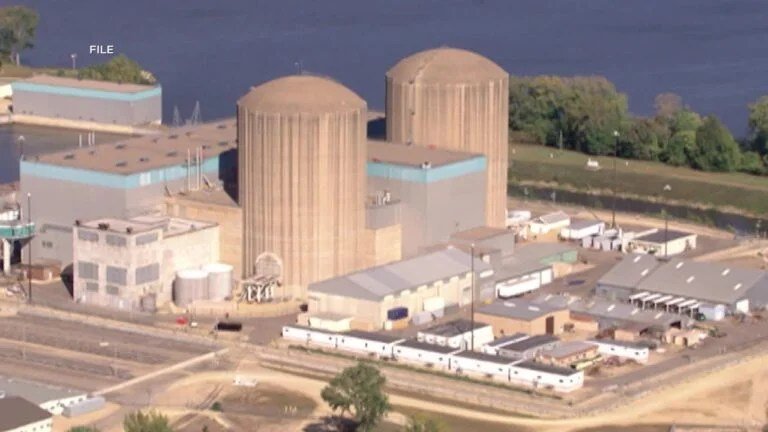
The Prairie Island Nuclear Generating Plant, a cornerstone of Minnesota's energy landscape, is set to continue powering homes for decades to come. Recent approval from the Minnesota Public Utilities Commission paves the way for the plant, located in Red Wing along the Mississippi River, to extend its operations through the early 2050s. This significant development underscores the plant's ongoing role in providing reliable, carbon-free electricity to over a million homes across the region.
Owned by Northern States Power Company, a subsidiary of Xcel Energy, and expertly operated by Xcel Energy, Prairie Island began its journey in 1973. It stands as one of Minnesota's two vital nuclear power plants. To truly appreciate its journey and significance, you might want to delve into the foundational aspects of its establishment and operations. Discover more about Prairie Island Nuclear Plant History.
Powering the Future: How Prairie Island Works
At the heart of the Prairie Island plant are two Westinghouse pressurized water reactors. These powerful units work in tandem to produce an impressive 1,076 to 1,100 megawatts of electricity. This substantial output is crucial for keeping the lights on and homes running for over 1 million residents. The plant's current licenses from the U.S. Nuclear Regulatory Commission (NRC) allow Unit 1 to operate until 2033 and Unit 2 until 2034.
The technology behind generating such a significant amount of power is complex and fascinating. Understanding the specifics of these reactors and their capabilities provides insight into why nuclear energy remains a key part of our energy mix. For a closer look at the mechanisms that drive this facility, explore Reactor Technology and Power Generation.
The Path to Extended Operations
The recent approval by the Minnesota Public Utilities Commission is a crucial step towards the plant's extended lifespan. Following this, and approval for increased spent fuel storage on-site, Xcel Energy plans to formally request a 20-year operating license extension from the U.S. Nuclear Regulatory Commission in 2026. This comprehensive review process by the NRC typically spans up to two years. It’s not the first time the plant has sought renewal; its initial 20-year license extensions were granted by the NRC in June 2011, stemming from Xcel's request in April 2008.
Addressing Environmental Concerns and Waste Management
The Prairie Island plant has faced significant public and environmental scrutiny, particularly concerning its on-site storage of nuclear waste. Located in a Mississippi River floodplain, the storage of spent nuclear fuel in large steel casks has raised valid concerns about potential water contamination. These discussions highlight the delicate balance between energy production and environmental stewardship.
In 1991, Xcel Energy initially sought to store waste in 48 dry casks. However, strong opposition from environmental groups and the adjacent Prairie Island Indian Community led the Minnesota Legislature to limit this to 17 casks. As these filled, the legislature granted an expansion, but with strict conditions: Xcel Energy committed to increasing its use of renewable energy and making annual payments of up to $2.25 million to the Prairie Island Indian Community. These funds support crucial initiatives like evacuation improvements, land acquisition and development, a health study, and emergency management activities. For a comprehensive understanding of how these challenges are addressed, you can Explore waste management strategies.
Community and Economic Contributions
Beyond its role as an energy provider, the Prairie Island plant is a significant economic contributor to the region and maintains a vital relationship with its neighboring community. The stipulated payments to the Prairie Island Indian Community for various development and safety initiatives demonstrate a tangible commitment to the well-being and security of the local population.
The plant's continued operation, now extended through the 2050s, ensures sustained employment and local economic activity. Understanding the broader impact of such a facility, from job creation to community investments, is essential for a complete picture. Delve into the multifaceted ways the plant influences its surroundings by exploring Economic Contribution and Community Engagement.
Upholding Safety: Protocols and Operational Events
Safety is paramount at any nuclear facility, and Prairie Island operates under stringent regulations set by the U.S. Nuclear Regulatory Commission (NRC). The NRC defines two critical emergency planning zones around nuclear power plants: a 10-mile (16 km) radius "plume exposure pathway zone" and a 50-mile (80 km) radius "ingestion pathway zone." In 2010, the population within these zones included 27,996 residents within 10 miles and a broader 2,945,237 within 50 miles, encompassing major cities like Minneapolis (39 miles) and St. Paul (32 miles). The NRC's robust oversight ensures constant vigilance. For detailed insights into the rigorous measures in place, consider reading about Nuclear Safety Protocols and Regulatory.
The plant has experienced several operational events over the years, each met with appropriate response and regulatory oversight:
- May 2006: Workers were exposed to very low levels of iodine-131 gas due to a filter leak during a steam generator inspection. The NRC deemed this to be of low safety significance.
- September 2013-January 2014: Unit 2 underwent a planned refueling outage and steam generator replacement, successfully resuming full power in January 2014.
- January 2015: Unit 1 had an emergency shutdown due to steam in the cooling system during a seal replacement but returned to full power the following month.
- March 2015 & December 2015: Unit 2 automatically shut down on separate occasions, first due to a fire alarm (without an actual fire) and later due to a turbine problem. Both were classified as "notification of an unusual event," the lowest emergency classification.
- May 2023: Unit 2 automatically shut down because of a malfunctioning external transformer, triggering fire alarms but posing no safety threat to the plant, with Unit 1 continuing normal operations.
- November 2023: Unit 2 went offline for routine refueling, followed shortly by Unit 1 shutting down due to an electrical issue, both managed within safety protocols.
Looking Forward: Innovation and Sustainability
The future of Prairie Island Nuclear Generating Plant is not just about continued operation, but also about innovation in sustainable energy. Xcel Energy plans to have the plant begin producing green hydrogen using high-temperature electrolysis, marking a significant step towards a cleaner energy future.
Furthermore, Xcel Energy intends to construct two new natural gas power plants capable of utilizing a 30% hydrogen mix. These plants are designed with the flexibility for future conversion into combined cycle hydrogen power plants, signaling a proactive approach to evolving energy demands and environmental goals. The extension of Prairie Island's operational life allows it to play a crucial role in bridging current energy needs with these exciting future advancements in power generation.